
STARTUP PROCESSES WITH TECHGURU EYES
- How has the epidemic affected the world's startup ecosystems over the past two years?
- Of course, Covid has not had the same impact. Some have gone bust, while others have gone from strength to strength. But many elements didn't work well: capitalists were reluctant to invest in times of extreme uncertainty, coworking offices closed, and customers focused not on innovation but on keeping their heads above water.
- How have the world's start-ups and innovative small companies coped?
- For the majority of startups, it was 'business as usual. Risk, failure, struggle, bootstrapping, and uncertainty are commonplace in the sector - regardless of the pandemic. Meanwhile, for example, the use of cyber technologies has grown because of teleworking, EdTech has advanced because of distance learning, and robotics and artificial intelligence have made great strides because of social distance and remote access technologies.
- And how was the last year?
- Controversial, but with many challenges, there were also many successes: during 2021, for example, Israeli startups raised more than $25 billion in investment with around $80 billion in exits, and on March 7 unicorns were born! (A unicorn is a tech company with a market capitalization of over $1 billion - ed.) While some saw Covid as an opportunity, for others the epidemic accelerated the failure process.
- What happened to the local startup communities?
- As described in the book Israel, the Startup Nation, my country is at the forefront of the startup world, not only in terms of numbers but also in terms of innovation culture and proactivity. Just as you are not born a doctor, a pilot, or a teacher, you are certainly not born a startup, a mentor, or an investor. Fortunately, startups, unlike the rest, can connect with local and global accelerators to develop their skills, network, and increase their chances of survival. And these organizations, like Pozi.io in Hungary, are building strong international relationships. The most important ability of start-ups is to grow fast, which is only possible with a supportive ecosystem. In my view, the biggest problem in Hungary is also the conquest of international markets. If talented people join such an organization, they can get the knowledge and networking they need to grow.
- The startup world seems to have lost its global momentum a few years ago. What will be the next two or three big things in the innovation world?
- I have to say that the reality is different: inventors will always be needed. What has changed is that while thirty years ago technology followed imagination, today it is the other way around. Unicorns, born in the current crisis, are a prime example of this. We used to think that Skype and WhatsApp were perfectly good enough to communicate; yet Zoom, Teams, and the like have become world leaders in a pandemic at lightning speed. As long as we could meet at offline conferences, everything was fine, the traditional tools of networking and communication all worked. And the same applies to online shopping, teleauthentication, smart contracts, blockchain projects, and the rise of more collaborative teleworking tools. The focus is now shifting to remote access and virtual technologies, which bring new challenges from distance learning to artificial intelligence to robotics, from remote sensing to remote diagnostics. And let's not forget the transformation of the entertainment and games market, with the birth of virtual multiverses and a new generation of online games. A new world is emerging in which roles are being redistributed.
- How might the role of Eastern European and Middle Eastern countries change in this new technological era?
- Central and Eastern European countries are renowned for their excellent workforce, which I would describe as professional, reliable, and capable rather than cheap. Every nation has good people in the start-up world, but the cultural and social perception of entrepreneurship and innovation is different. In Israel, there is a strong mindset that "yes, you can!" - you can do it, you can invent, develop and market just like anyone else, just believe you can do it, and be open to collaboration and sharing. But in this region, you need to have a strong cooperative approach. The market will not accept those who don't want success enough, who don't do enough to achieve it.
- How can a fledgling start-up become a big success?
- The recipe is simple: the idea should solve a real problem, which, validated by potential customers, becomes a solution that can be developed and sold. Once the problem has been proven to be real and there is a solid demand to solve it, develop a marketable solution as quickly as possible. Because the market waits for no one. If your MVP (minimum viable product - ed.) is too detailed, it means you are too late and have probably wasted valuable time and money. And if the market need and the solution seem to meet, then you need to start selling immediately, both locally and globally.
"I don't think everyone should start a startup, but everyone should join a business at some stage along the way. I think startups are different from other people," Tal Catran.
- This raises the question of whether a start-up that is a small company can grow at a good pace in small local markets.
- Startups can grow well everywhere, given the market size they can handle. In any case, they need to prove that they can compete locally, if only because it is usually more affordable for them. The next level is of course to go global, which is much, much more expensive. In addition, product naming and a very good knowledge of the local market and consumption patterns are very important. Care must be taken as to which country is the best place to launch the project, as each has its own challenges. Israel, for example, is too small a market - as is Hungary. But the United States may be too big for a small company at first, while China is a difficult place to start because of the existing solutions tailored to the "tastes" of the local market.
- How do you see our country?
- Hungary is relatively young in terms of startup community building, which affects the maturity and readiness of the ecosystem. In fact, it has not yet produced any real unicorns (an exception is perhaps LogMeIn, founded in 2003 but which has grown big in North America and recently changed its name, and which few people know as a Hungarian company - ed.) Despite this, accelerators are opening, entrepreneurship education is being introduced into universities and the government has recognized that investment has a significant role to play in boosting the start-up ecosystem. But of course, it would be great if entrepreneurship education started in secondary schools, helping students to be creative in solving real needs. It would also be useful if more government and EU money could be channeled into the ecosystem so that it could be used more effectively to build up the supply of start-ups, take projects to international markets, and provide quality mentoring.
- What is your impression of the local ecosystem?
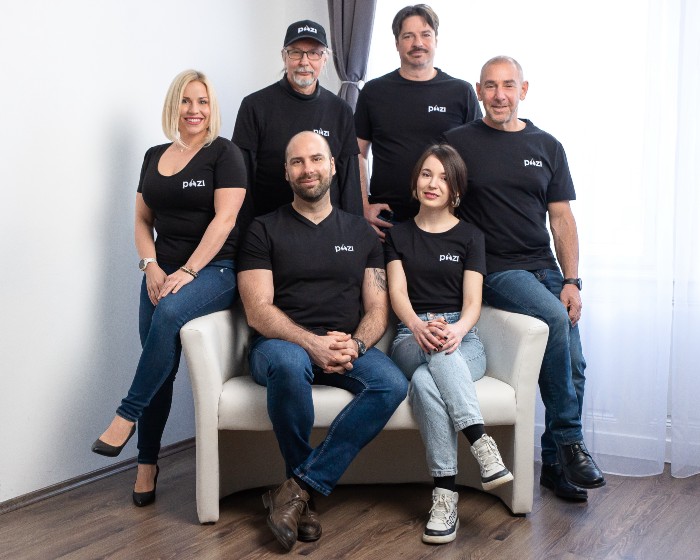
- My visit was not long enough to give you a full answer to all your questions, but it is clear to me that where there is a will, there is a way. I can mention the Pozi.io open innovation platform, which I have now joined as chair of the advisory board, which response to the open innovation needs of local industry as well as the global market. The site already offers challenges to innovators from 65 countries. It not only brings together startups but also gives them the opportunity to showcase their solutions.
- When can projects be really successful in this crowded field?
- I don't think everyone should find a startup, but everyone should join a venture at some stage along the way. I think startup founders are different from other people: hard-working, technologically brilliant, self-motivated, tenacious individuals, but generally inexperienced in management and finance. These young (or older) people will be even more successful if their projects enjoy a broader support ecosystem in Hungary that can count on the strong academic, industry, municipal and peer-government support, and that grows with targeted, results-oriented programs developed in international incubators and accelerators, with clear results, in line with market needs.
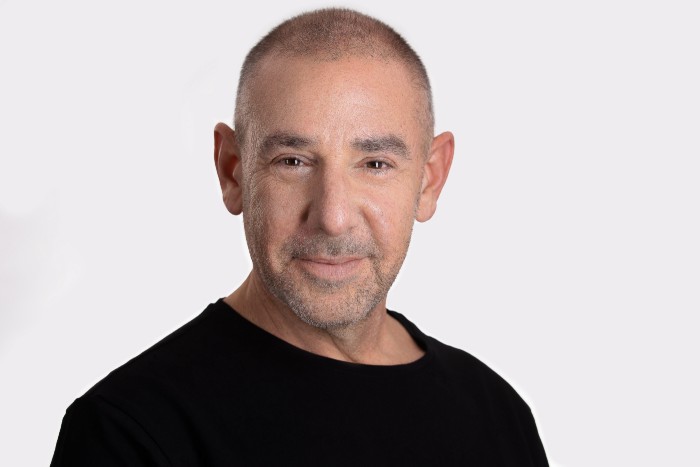
GET TO KNOW HIM:
--> 53 years old, married, with three children.
--> Israeli accelerator guru, keynote speaker at international conferences, angel investor, founder and expert of 15 international accelerators, and professional startup ecosystem builder.
--> Currently he is a senior advisor to the Hungarian-founded international innovation community Pozi.io.
--> Mentor and expert in incubators in Israel, Lithuania, Azerbaijan, China, and Hungary.
--> Expert slogan: Don't hesitate! Accelerate!
--> In his free time, he likes to sail on the sea.
The article was published in FIGYELŐ Magazine 2022/6.
Kategória
 Social Innovation
 Startup news
- Success & Failure Stories